

Table of Contents
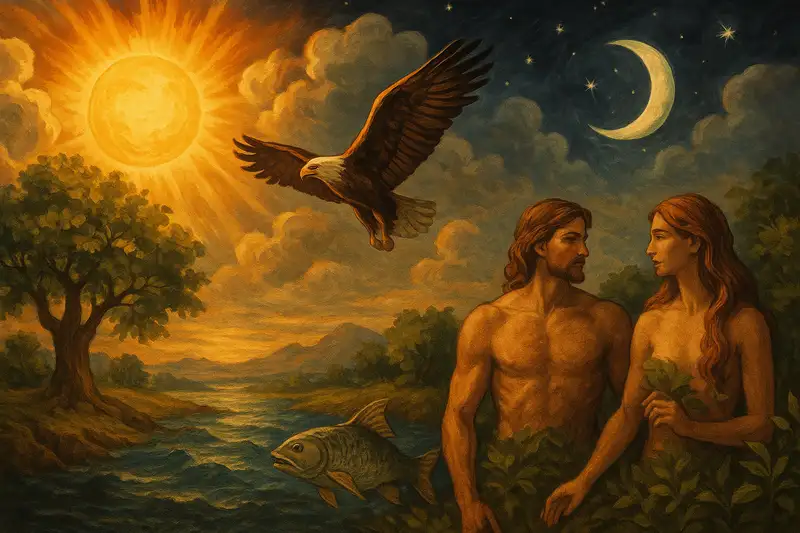
Did the universe arise by chance—or by the word of God? Genesis 1 confronts us with a radical claim: “In the beginning God created the heaven and the earth.” (KJV 1611). The Seven Days of Creation are not myth, but divine revelation: God speaks, and reality obeys.
Introduction
Genesis 1 is more than a story of beginnings; it is the foundation of biblical faith. In just thirty-one verses, Scripture unveils God’s creative power and purposeful design. Each day follows a rhythm: God speaks, creation responds, and the result is declared good. This steady cadence builds toward the crowning moment when humanity is formed “in the image of God” (Genesis 1:27, KJV 1611).
The Seven Days of Creation move from light to life, from formless void to flourishing order. Day by day, God reveals His sovereignty: separating light from darkness, shaping land and sea, placing the sun, moon, and stars in the heavens, filling the waters and skies with creatures, and finally appointing mankind as stewards over the earth.
Yet this account is not merely historical. It speaks to us today. When we read that “God saw every thing that he had made, and, behold, it was very good” (Genesis 1:31, KJV 1611), we are reminded that life itself is a gift, filled with meaning and dignity. The rhythm of creation still guides us: light overcoming darkness, work balanced by rest, humanity entrusted with responsibility.
To reflect on Genesis 1 is to rediscover the heart of the Creation Story: a world made with intention, a Creator who delights in His work, and a humanity called to live with purpose.
Context of the Chapter / Book
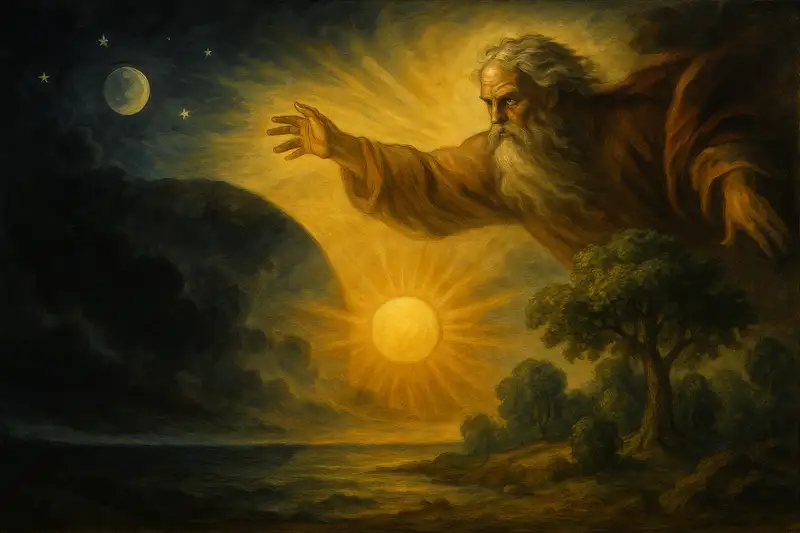
The Seven Days of Creation are found at the very beginning of Scripture, in Genesis 1. This placement is no accident. Genesis, the first book of the Bible, sets the stage for all that follows. Its very name, derived from the Greek genesis meaning “origin” or “beginning,” signals that we are about to encounter the foundations of both the world and God’s covenant purposes.
Genesis was traditionally attributed to Moses, and its opening chapter provides a theological prologue to the Pentateuch. Unlike the mythological stories of creation found in other ancient cultures, the Creation Story in Genesis 1 presents God as the sole, eternal Creator. He does not battle other deities or wrestle with chaos; instead, He speaks, and creation responds. As the text declares: “And God said, Let there be light: and there was light” (Genesis 1:3, KJV 1611).
Literarily, Genesis 1 introduces a rhythm and order that will shape the narrative of Scripture. Each day follows a pattern: divine command, fulfillment, evaluation, and closure. The repeated phrase “And God saw that it was good” emphasizes not only the orderliness of creation but also its inherent goodness. This pattern culminates in the creation of humanity on the sixth day, described as being made “in the image of God” (Genesis 1:27, KJV 1611).
Historically, Genesis 1 also served to distinguish Israel’s faith from surrounding nations. While Babylonian or Canaanite traditions portrayed the cosmos as born out of struggle or chance, Israel’s God is shown as sovereign and purposeful. This theological contrast continues to be vital for readers today.
In short, the Seven Days of Creation serve as both a cosmic introduction and a theological declaration: the universe is not random but the deliberate work of a good and sovereign God.
Chapter Overview
The Seven Days of Creation form the central framework of Genesis 1, giving shape to the entire biblical Creation Story. Each day introduces a new act of divine order: light breaking through darkness, waters being separated, dry land emerging, vegetation sprouting, heavenly bodies taking their place, living creatures filling the seas and skies, and finally mankind being made in the image of God. The account follows a deliberate rhythm—God speaks, creation responds, and the outcome is declared good.
This structure reveals not only what was created but also how God’s power operates. Unlike mythological accounts of struggle or accident, the narrative shows a sovereign God bringing harmony out of chaos by the sheer authority of His word. The recurring phrases “And God said” and “And it was so” highlight this theme, while the repeated declaration “God saw that it was good” underscores creation’s inherent value.
In this overview, we will walk through each day of the Seven Days of Creation, noting its unique contribution to the larger pattern. Together, these seven movements present a masterpiece of divine order, culminating in God’s rest and delight in His finished work.
Day 1: Light and Darkness
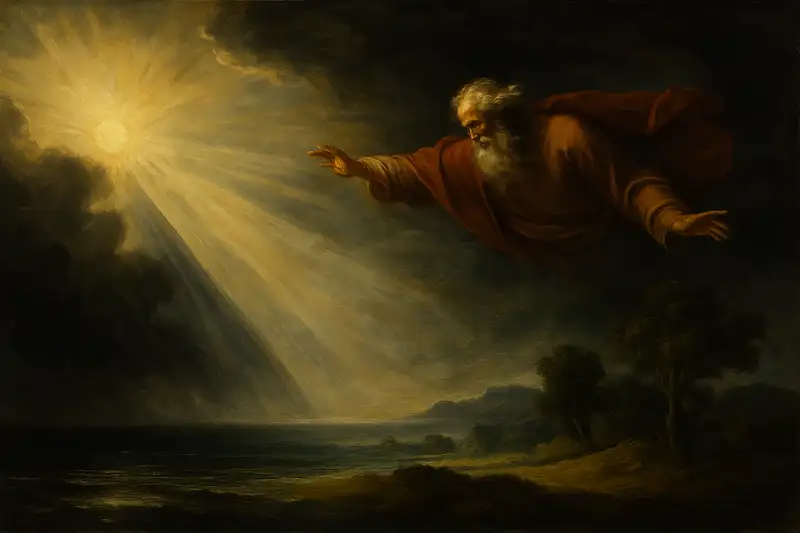
Genesis 1:3
“And God said, Let there be light: and there was light.”
Genesis 1:1–5 describes the very first act in the Seven Days of Creation. The chapter begins: “In the beginning God created the heaven and the earth. And the earth was without form, and void; and darkness was upon the face of the deep.” (Genesis 1:1–2, KJV 1611). Into this formless emptiness, God speaks: “Let there be light: and there was light.” (Genesis 1:3, KJV 1611).
This simple yet profound command sets the tone for the entire Creation Story. The act of bringing light out of darkness is more than physical illumination; it is the establishment of divine order over chaos. By naming the light “Day” and the darkness “Night,” God introduces the rhythm of time itself: “And the evening and the morning were the first day.” (Genesis 1:5, KJV 1611).
Theologically, this passage highlights the power of God’s word. Creation does not resist; it responds immediately. Light exists because God wills it into being. Later biblical writers echo this theme. In 2 Corinthians 4:6, Paul draws on Genesis 1 to describe spiritual transformation: “For God, who commanded the light to shine out of darkness, hath shined in our hearts.”
For readers today, Day 1 of the Seven Days of Creation speaks of both hope and order. In a world that often feels chaotic, God remains the one who brings clarity and direction. Just as the first light pierced the primeval darkness, His truth shines into human lives, dispelling confusion and despair.
The Creation Story begins not with struggle, but with victory: light triumphs over darkness, and God declares it good.
Day 2: The Firmament

Genesis 1:7
“And God made the firmament, and divided the waters… and it was so.”
On the second day of the Seven Days of Creation, God brings further order to the universe. Genesis 1:6–8 records: “And God said, Let there be a firmament in the midst of the waters, and let it divide the waters from the waters. And God made the firmament, and divided the waters which were under the firmament from the waters which were above the firmament: and it was so. And God called the firmament Heaven. And the evening and the morning were the second day.” (KJV 1611).
The word firmament (Hebrew raqia) literally means an expanse or a stretched-out dome. In the biblical worldview, it represents the vast space between the waters above and the waters below, which God names “Heaven.” This act separates and structures creation, ensuring that the cosmos is no longer an undifferentiated chaos but a place of order and life.
Theologically, Day 2 emphasizes God’s sovereignty over the very structure of reality. Unlike ancient Near Eastern myths, where gods fought to carve out the heavens, the Creation Story in Genesis 1 shows God effortlessly commanding space into existence. His authority is absolute: He speaks, and the heavens take form.
Symbolically, the firmament points to God’s transcendence. It establishes the heavens as distinct from the earth, reminding humanity that creation is layered and purposeful. Later Scripture often speaks of the heavens declaring God’s glory (Psalm 19:1), an echo of the foundation laid on this second day.
For today’s reader, Day 2 of the Seven Days of Creation encourages awe at the vastness of God’s design. The skies above us are not accidental; they are a deliberate part of creation, stretching from horizon to horizon as a reminder of His majesty. Every sunrise and starry night testifies to the God who set the firmament in place.
Day 3: Land and Sea, Plants and VegetationTitel
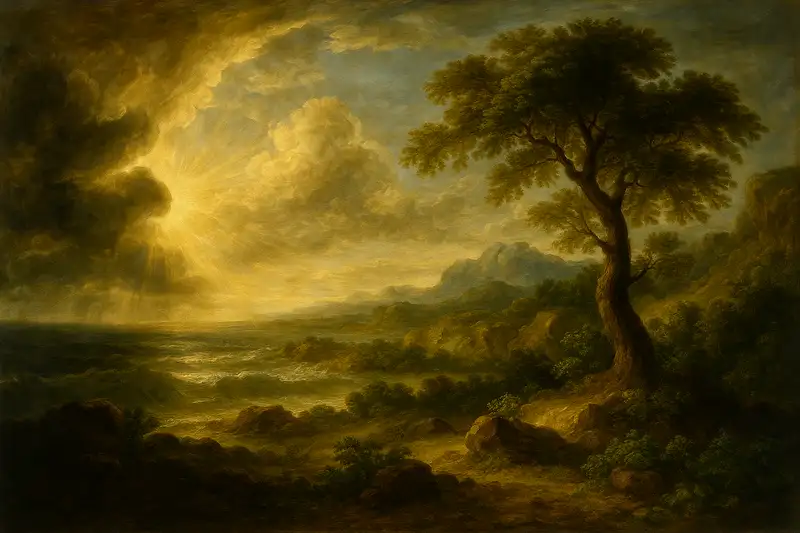
Genesis 1:9, 12
“And God said, Let the dry land appear… and the earth brought forth grass.”
On the third day of the Seven Days of Creation, God brings forth structure and life from the watery expanse. Genesis 1:9–13 records: “And God said, Let the waters under the heaven be gathered together unto one place, and let the dry land appear: and it was so. And God called the dry land Earth; and the gathering together of the waters called he Seas: and God saw that it was good.” (KJV 1611).
This moment marks a decisive step in the Creation Story in Genesis 1: the separation of land and sea provides the foundation for all terrestrial life. God’s command brings order to the chaotic waters, setting boundaries that remain to this day. The Psalmist later reflects on this, saying: “Thou hast set a bound that they may not pass over, that they turn not again to cover the earth.” (Psalm 104:9, KJV 1611).
But God does not stop with bare land. He fills it with “grass, the herb yielding seed, and the fruit tree yielding fruit after his kind” (Genesis 1:11, KJV 1611). This introduces a principle of continuity and reproduction: each plant reproduces “after its kind.” Creation is not random but governed by God’s order, ensuring that life is sustainable and fruitful.
Theologically, Day 3 emphasizes both God’s sovereignty and His generosity. The land and sea symbolize stability and boundary, while plants and vegetation represent provision and abundance. Humanity, though not yet created, will later depend on this divine provision for survival.
For today’s reader, Day 3 reminds us that the resources of the earth are gifts from God, entrusted to our stewardship. Every field of grain and every tree heavy with fruit bears witness to the Creator’s care. In declaring this stage of creation “good,” God affirms both the beauty and the purpose of the natural world.
Day 4: Sun, Moon, and Stars
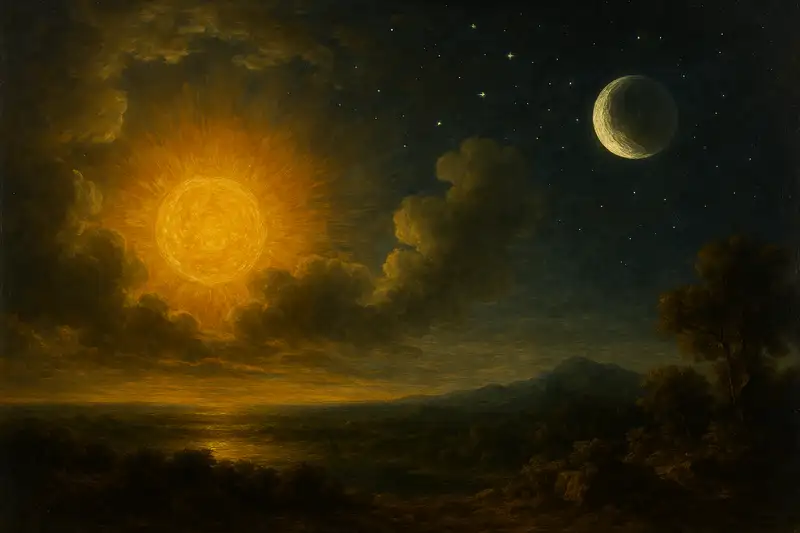
Genesis 1:16
“And God made two great lights… he made the stars also.”
On the fourth day of the Seven Days of Creation, God turns His attention to the heavens. Genesis 1:14–19 declares: “And God said, Let there be lights in the firmament of the heaven to divide the day from the night; and let them be for signs, and for seasons, and for days, and years: And let them be for lights in the firmament of the heaven to give light upon the earth: and it was so.” (KJV 1611).
Here, the sun, moon, and stars are set in place. They are not deities, as in many ancient cultures, but created instruments serving God’s design. Their purposes are practical and theological: to govern day and night, to mark the passage of time, and to give light upon the earth. “And God made two great lights; the greater light to rule the day, and the lesser light to rule the night: he made the stars also.” (Genesis 1:16, KJV 1611).
Theologically, Day 4 highlights God’s authority over time itself. By appointing heavenly bodies as markers of seasons, days, and years, He establishes a cosmic rhythm. This order later undergirds Israel’s worship calendar—festivals, Sabbaths, and appointed times all flow from this divine arrangement.
Symbolically, the lights in the sky also serve as reminders of God’s faithfulness. Just as the sun rises each morning, God’s mercies are new every day (Lamentations 3:23). The night sky, studded with stars, invites awe and reflection on the vastness of creation and humanity’s small yet honored place within it (Psalm 8:3–4).
For modern readers, Day 4 of the Seven Days of Creation speaks both to wonder and humility. Every sunrise testifies to divine order, and every constellation declares the Creator’s artistry. What the ancients feared as gods, Genesis reveals as servants of the one true God—lights appointed to shine for His glory and our good.
Day 5: Birds and Fish
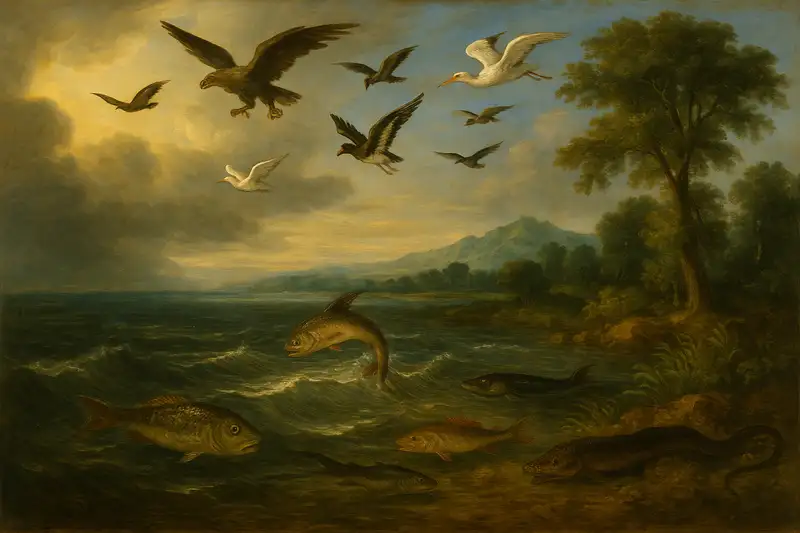
Genesis 1:21–22
“And God created great whales, and every winged fowl… and God blessed them.”
On the fifth day of the Seven Days of Creation, God fills the newly formed sky and seas with living creatures. Genesis 1:20–23 records: “And God said, Let the waters bring forth abundantly the moving creature that hath life, and fowl that may fly above the earth in the open firmament of heaven. And God created great whales, and every living creature that moveth, which the waters brought forth abundantly, after their kind, and every winged fowl after his kind: and God saw that it was good.” (KJV 1611).
This passage highlights abundance and diversity. The seas, once empty, now teem with fish and great sea creatures, while the skies resound with the beating of wings. The Hebrew text emphasizes “swarming” and “multiplying,” conveying a picture of overflowing life. God’s creative word not only brings existence but also establishes the capacity for reproduction—“after their kind.”
Theologically, Day 5 demonstrates God’s delight in variety and His generosity in filling creation with beauty and movement. Birds soaring in the sky and fish darting through the waters reflect the richness of divine imagination. The phrase “God saw that it was good” assures us that this stage of creation, like the others, was intentional and pleasing to Him.
God also blesses these creatures, saying: “Be fruitful, and multiply, and fill the waters in the seas, and let fowl multiply in the earth.” (Genesis 1:22, KJV 1611). This is the first explicit blessing in Scripture, marking a significant theological theme: God’s purpose for life is fruitfulness and flourishing.
For readers today, Day 5 of the Seven Days of Creation reminds us to marvel at the natural world. The migration of birds, the mystery of ocean depths, and the balance of ecosystems all bear witness to God’s wisdom. Creation is not static but dynamic, alive with God’s blessing and provision.
Day 6: Animals and Humanity
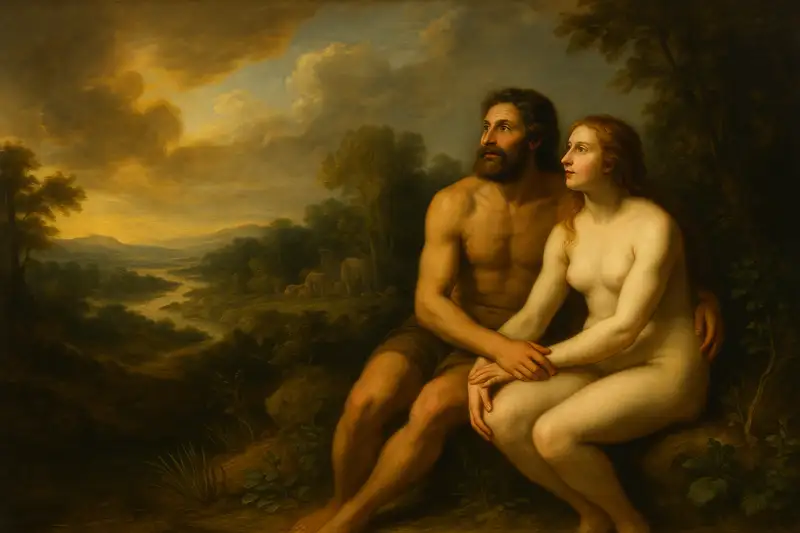
Genesis 1:27
“So God created man in his own image… male and female created he them.”
The sixth day of the Seven Days of Creation is the climax of Genesis 1. God first fills the land with living creatures: “And God said, Let the earth bring forth the living creature after his kind, cattle, and creeping thing, and beast of the earth after his kind: and it was so. And God made the beast of the earth after his kind, and cattle after their kind, and every thing that creepeth upon the earth after his kind: and God saw that it was good.” (Genesis 1:24–25, KJV 1611).
Yet the pinnacle comes in verses 26–28, when humanity is created. “And God said, Let us make man in our image, after our likeness: and let them have dominion over the fish of the sea, and over the fowl of the air, and over the cattle, and over all the earth, and over every creeping thing that creepeth upon the earth.” (Genesis 1:26, KJV 1611). Here the Creation of Humanity is distinct from all other acts. Man and woman are made “in the image of God”, endowed with dignity, rationality, and spiritual capacity.
God blesses humanity with a mandate: “Be fruitful, and multiply, and replenish the earth, and subdue it: and have dominion over the fish of the sea, and over the fowl of the air, and over every living thing that moveth upon the earth.” (Genesis 1:28, KJV 1611). This charge introduces both privilege and responsibility. Dominion is not exploitation but stewardship—a call to care for creation as God’s representatives.
Theologically, Day 6 reveals humanity as the crown of creation. Animals reflect God’s creativity, but humans uniquely bear His image. For readers today, this affirms human dignity and challenges us to live responsibly within creation. To be fruitful, to multiply, and to rule wisely is to participate in God’s ongoing purposes for the world.
In declaring all this “very good” (Genesis 1:31), God seals the sixth day as the culmination of His creative work.
Day 7: God’s Rest

Genesis 2:2
“And on the seventh day God ended his work… and he rested.”
The Seven Days of Creation conclude not with more activity but with divine rest. Genesis 2:1–3 describes it this way: “Thus the heavens and the earth were finished, and all the host of them. And on the seventh day God ended his work which he had made; and he rested on the seventh day from all his work which he had made. And God blessed the seventh day, and sanctified it: because that in it he had rested from all his work which God created and made.” (KJV 1611).
Although technically the passage appears at the beginning of Genesis 2, it completes the Creation Story of Genesis 1. Here, rest does not mean exhaustion, as though the Almighty grew weary. Rather, it signifies satisfaction and completion. God ceases from creating because His work is perfect and whole. By blessing and sanctifying the seventh day, He establishes a sacred rhythm for all of life: work followed by rest, labor crowned with worship.
Theologically, Day 7 reveals God’s sovereignty over time and His desire for communion with creation. Later Israel will be commanded to observe the Sabbath as a sign of covenant faithfulness (Exodus 20:8–11). The pattern originates here: God Himself sets apart a day for reflection, restoration, and relationship.
For today’s reader, Day 7 of the Seven Days of Creation carries profound significance. In a culture often driven by endless activity, God’s rest calls us back to balance. Sabbath is not merely the absence of work but the presence of peace, gratitude, and worship. It is a weekly reminder that we are not defined by our labor but by God’s love.
Thus, the Creation Story closes with both majesty and tenderness: the universe ordered, life flourishing, humanity blessed, and time itself sanctified by God’s rest.
Key Themes & Theological Message
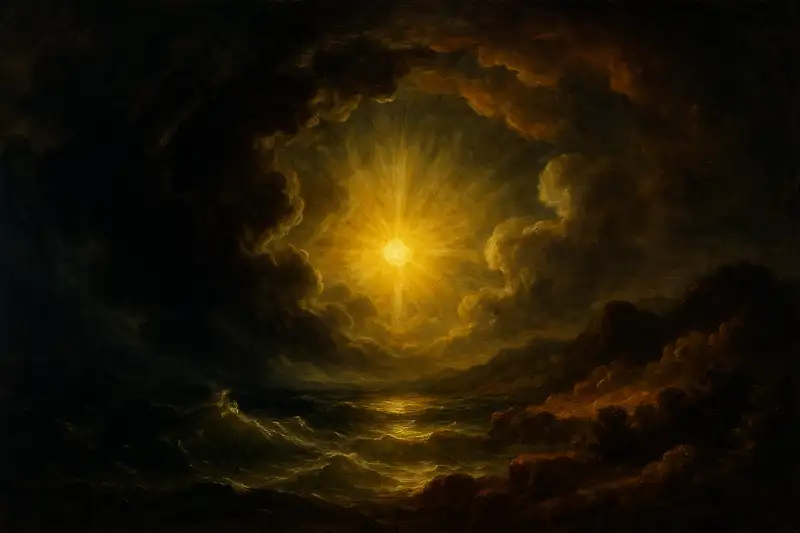
The Seven Days of Creation are more than a chronological record; they are a theological declaration of who God is and how He works. At the heart of Genesis 1 lies the truth of creation ex nihilo—God creating out of nothing. Unlike pagan myths that describe worlds born from conflict or accident, Genesis presents a sovereign God who speaks reality into existence. His word is sufficient: “And God said… and it was so.” (Genesis 1:7, KJV 1611).
Another key theme is order out of chaos. The earth begins “without form, and void” (Genesis 1:2, KJV 1611), but through God’s commands, boundaries emerge: light from darkness, waters above from waters below, land from sea. Creation is not random but structured, purposeful, and good. This pattern underscores God’s character as both powerful and orderly.
The theme of light vs darkness carries both physical and symbolic meaning. God’s first act—“Let there be light” (Genesis 1:3, KJV 1611)—introduces not only physical illumination but also a metaphor for truth, goodness, and divine presence. Later Scripture echoes this, as in John 1:5: “And the light shineth in darkness; and the darkness comprehended it not.”
Equally significant is the refrain “And God saw that it was good” (Genesis 1:10, 12, 18, 21, 25, KJV 1611). Creation is not morally neutral but infused with goodness because it reflects its Creator. The climax comes in Genesis 1:31: “And God saw every thing that he had made, and, behold, it was very good.”
Theologically, Genesis 1 affirms that God is the source of all life, that creation is purposeful and good, and that humanity, made in His image, is central to His plan. These themes continue to resonate, shaping Christian thought and offering a framework for faith, stewardship, and worship.
Practical Relevance for Today
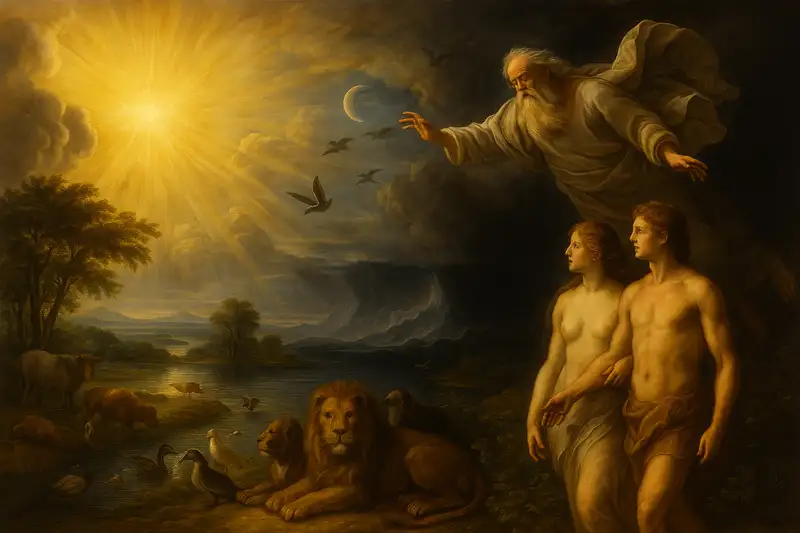
The Seven Days of Creation are not only an account of ancient history; they carry profound relevance for modern life. Genesis 1 speaks directly to questions of purpose, identity, and responsibility.
First, humanity is created with dignity. “So God created man in his own image, in the image of God created he him; male and female created he them.” (Genesis 1:27, KJV 1611). Being made in the image of God means that every person possesses inherent worth. In a world that often measures value by wealth or status, this truth affirms that life itself is sacred.
Second, God entrusts humanity with responsibility. “And God blessed them, and God said unto them, Be fruitful, and multiply, and replenish the earth, and subdue it: and have dominion…” (Genesis 1:28, KJV 1611). This mandate to be fruitful and multiply and to exercise dominion over animals is not a license to exploit creation but a call to stewardship. Caring for the earth, protecting its creatures, and cultivating its resources wisely are acts of obedience to God.
Third, the theme of light vs darkness continues to inspire hope. Just as God’s first act was to shine light into the void (Genesis 1:3), He continues to bring clarity into human confusion and hope into despair. For believers, this becomes a spiritual reality: God’s truth dispels the darkness of sin and fear.
Finally, the rhythm of creation reminds us to balance work and rest. In a culture driven by busyness, the Sabbath principle—rooted in the seventh day—calls us back to renewal and worship.
In short, Genesis 1 teaches us who we are, why we are here, and how we are to live: with dignity, responsibility, hope, and balance under the care of the Creator.
Deeper Insights into the Seven Days of Creation
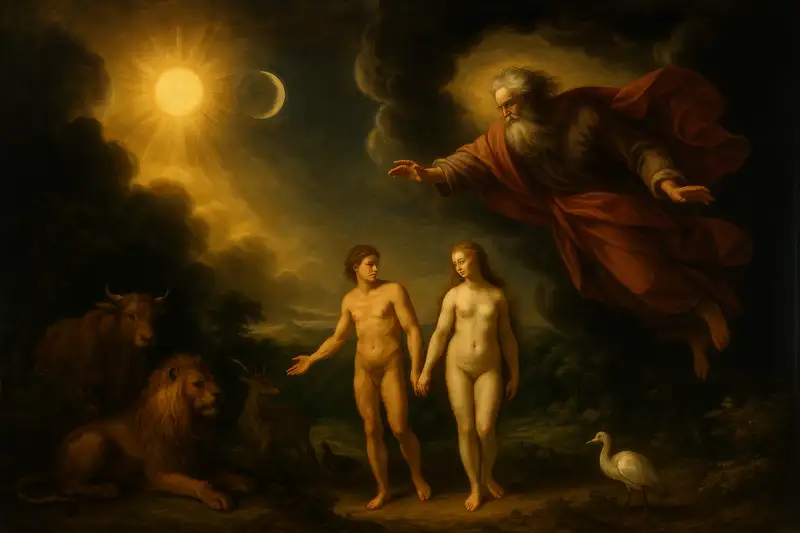
For readers seeking deeper study, the Seven Days of Creation invite exploration of the biblical languages and theological traditions that enrich Genesis 1.
The Hebrew verb used in Genesis 1:1 is bara, translated “created.” Unlike other Hebrew verbs for making or shaping, bara is used exclusively of God’s creative activity. It underscores the doctrine of creation ex nihilo, that God brings the universe into being from nothing, by His sovereign will alone. This sets the biblical account apart from myths where matter is eternal or shaped from chaos.
Genesis 1:2 describes the earth as tohu va-bohu—“without form, and void.” This poetic phrase captures the absence of structure and fullness. The subsequent acts of creation demonstrate order out of chaos, as God systematically separates, fills, and blesses the world. Light conquers darkness, seas are bounded, and life abounds.
The term raqia, rendered “firmament” (Genesis 1:6), suggests an expanse stretched out by God’s hand. To ancient readers, this signified the heavens as a divine dome, yet the theological message is timeless: the sky itself is part of God’s ordered design, not an independent force.
In the New Testament, the Greek logos (John 1:1) connects directly back to Genesis 1. John writes, “In the beginning was the Word… All things were made by him.” Here, Christ is revealed as the eternal Word through whom the Creation Story in Genesis 1 finds fulfillment. The same voice that said “Let there be light” (Genesis 1:3) is the voice that brings spiritual light to the world.
Thus, Genesis 1 is both ancient and eternal. Its language is deeply rooted in Hebrew poetry and theology, yet its message reaches across Testaments, showing that the Creator of the beginning is also the Redeemer of humanity.
Reflection Questions
The Seven Days of Creation are not only a theological foundation but also an invitation to personal reflection. They call each reader to consider how God’s creative work speaks into daily life. Here are three guiding questions to help deepen engagement with Genesis 1:
1. What does “Let there be light” mean for your own journey of faith?
In Genesis 1:3 we read, “And God said, Let there be light: and there was light.” Light here is more than physical brightness; it symbolizes truth, clarity, and divine presence. How might God be speaking light into areas of confusion or darkness in your life today?
2. How does being made “in the image of God” shape your view of yourself and others?
Genesis 1:27 declares: “So God created man in his own image… male and female created he them.” To be made in God’s image is to carry inherent dignity and value. How does this truth challenge the way we see ourselves, and how does it call us to treat others with respect and compassion?
3. What does Sabbath rest look like in your life?
The Seven Days of Creation culminate not in work but in rest. Genesis 2:2 says, “And on the seventh day God ended his work… and he rested.” In a restless world, God sets apart time for renewal and worship. What rhythms of rest and reflection do you need to cultivate so that your life mirrors the divine pattern of creation?
By pondering these questions, we move beyond reading Genesis 1 as history and begin to experience it as a living word—guiding, challenging, and renewing our hearts.
Takeaways: Seven Days of Creation
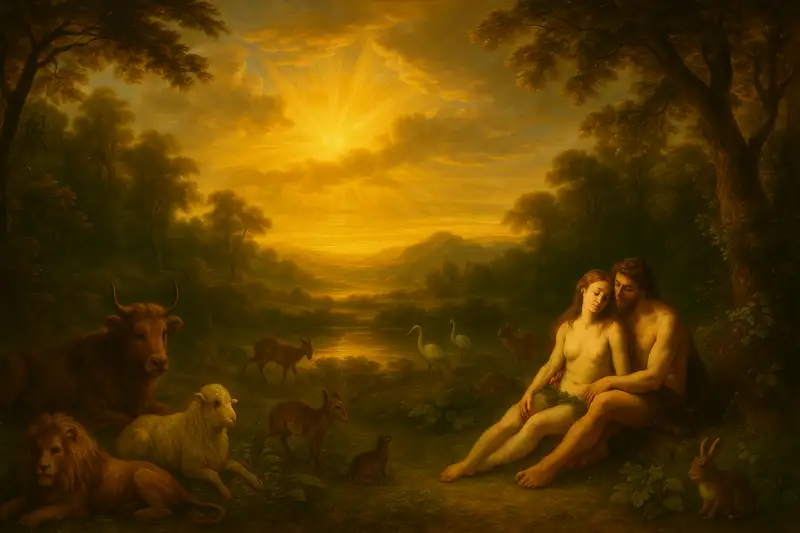
The Seven Days of Creation provide more than a record of beginnings; they offer enduring lessons for faith and life. Here are key truths to carry forward:
- God creates with purpose. Nothing in Genesis 1 is accidental. “And God said… and it was so.” (Genesis 1:7, KJV 1611) shows that creation responds to His word with order and obedience.
- Light triumphs over darkness. The very first command, “Let there be light” (Genesis 1:3, KJV 1611), reminds us that God’s presence brings clarity, hope, and renewal wherever confusion reigns.
- Creation is good. Repeatedly the text affirms, “And God saw that it was good.” (Genesis 1:10, 12, 18, 21, 25). At the end, “behold, it was very good.” (Genesis 1:31). This goodness still echoes in the beauty of nature and the dignity of human life.
- Humanity bears God’s image. “So God created man in his own image.” (Genesis 1:27, KJV 1611). Every person carries divine worth, shaping how we view ourselves and treat others.
- Stewardship is a sacred calling. Humanity is commanded to “have dominion over the fish of the sea… and over every living thing that moveth upon the earth.” (Genesis 1:28, KJV 1611). This dominion is responsibility, not exploitation.
- Rest is holy. On the seventh day, “God blessed the seventh day, and sanctified it.” (Genesis 2:3, KJV 1611). Rest is not weakness but worship, a reminder that God is our ultimate source of life.
Together, these truths show that the Creation Story in Genesis 1 is both ancient and ever-relevant, teaching us about God’s power, creation’s goodness, and humanity’s purpose.
FAQ: Seven Days of Creation

1. What are the Seven Days of Creation?
The Seven Days of Creation in Genesis 1 describe how God created the world in six days and rested on the seventh. Each day reveals a new stage of order, from light and land to living creatures and humanity.
2. What does “Let there be light” mean?
In Genesis 1:3, “Let there be light” marks God’s first creative act. It shows His power to bring light out of darkness, both physically and spiritually.
3. What is creation ex nihilo?
The phrase means “creation out of nothing.” Genesis 1:1 affirms that God did not work with pre-existing matter; He spoke, and the universe came into being.
4. Why did God call creation “good”?
Six times in Genesis 1 we read “And God saw that it was good.” This emphasizes that creation reflects God’s order, purpose, and beauty. At the end, He declares it “very good.” (Genesis 1:31, KJV 1611).
5. What does it mean to be made in the image of God?
Genesis 1:27 teaches that humanity reflects God’s nature in unique ways—through reason, morality, creativity, and relationship. This gives every person dignity and responsibility.
6. Why is the seventh day important?
Genesis 2:2–3 tells us that God rested, blessed, and sanctified the seventh day. The Sabbath introduces a rhythm of rest and worship, pointing us to God as the ultimate source of life.
Conclusion
The Seven Days of Creation reveal a God of power, order, and goodness. From the first command of light to the creation of humanity in His image, Genesis 1 shows us that life is purposeful and sacred. The chapter closes with rest, reminding us that true fulfillment is found not in endless striving but in communion with the Creator.
As we turn from Genesis 1 to Genesis 2, the focus narrows from the vastness of creation to the intimate story of the Garden of Eden. Together, these chapters form the foundation of Scripture, calling us to worship the God who made all things and declared them very good.
Discover More in Genesis
The story of the Seven Days of Creation is only the beginning. Genesis 1 reveals God as Creator, but the journey continues into Genesis 2, where Scripture draws us closer into the Garden of Eden and the first steps of humanity. Each chapter deepens our understanding of God’s purpose and His relationship with the world.
If this chapter has inspired you, I invite you to continue exploring the unfolding narrative of Genesis. Reflect on the goodness of creation, the dignity of humanity, and the call to live as faithful stewards of God’s world.
For a more interactive way to engage, try our Bible Word Search Puzzle on the Creation Story. It allows you to meditate on the very verses of Genesis 1 while enjoying a thoughtful and relaxing activity.
👉 Explore more chapters of Genesis here
👉 Try the Creation Word Search Puzzle
Step further into the story, and let the Creation Story in Genesis 1 guide your heart toward deeper faith and understanding.
